Your air conditioner does more than cool your home. The HVAC system also plays an important role in moving and filtering indoor air, managing humidity, and maintaining a comfortable environment. That makes the air filter a small but important part of the system.
However, choosing the highest-rated filter is not always the best choice. A filter that is too restrictive for a particular HVAC system can reduce airflow and make the equipment work harder. At the same time, an unsuitable or neglected filter can allow more dust and particles to circulate through the home.
Understanding how filtration, airflow, humidity, and indoor air quality work together can help homeowners make better maintenance decisions.
What Does an AC Filter Actually Do?
An HVAC filter is designed primarily to capture airborne particles before they move through the system and into living spaces. Depending on the filter type, it may capture dust, pollen, pet-related particles, and other airborne debris.
The filter also protects the HVAC equipment. Without adequate filtration, dust and debris can accumulate on internal components and reduce system performance over time.
A filter is therefore important for both indoor air quality and HVAC maintenance, but it is only one part of a complete indoor air quality strategy.
Does a Higher-Rated Filter Mean Better Air Quality?
Not necessarily.
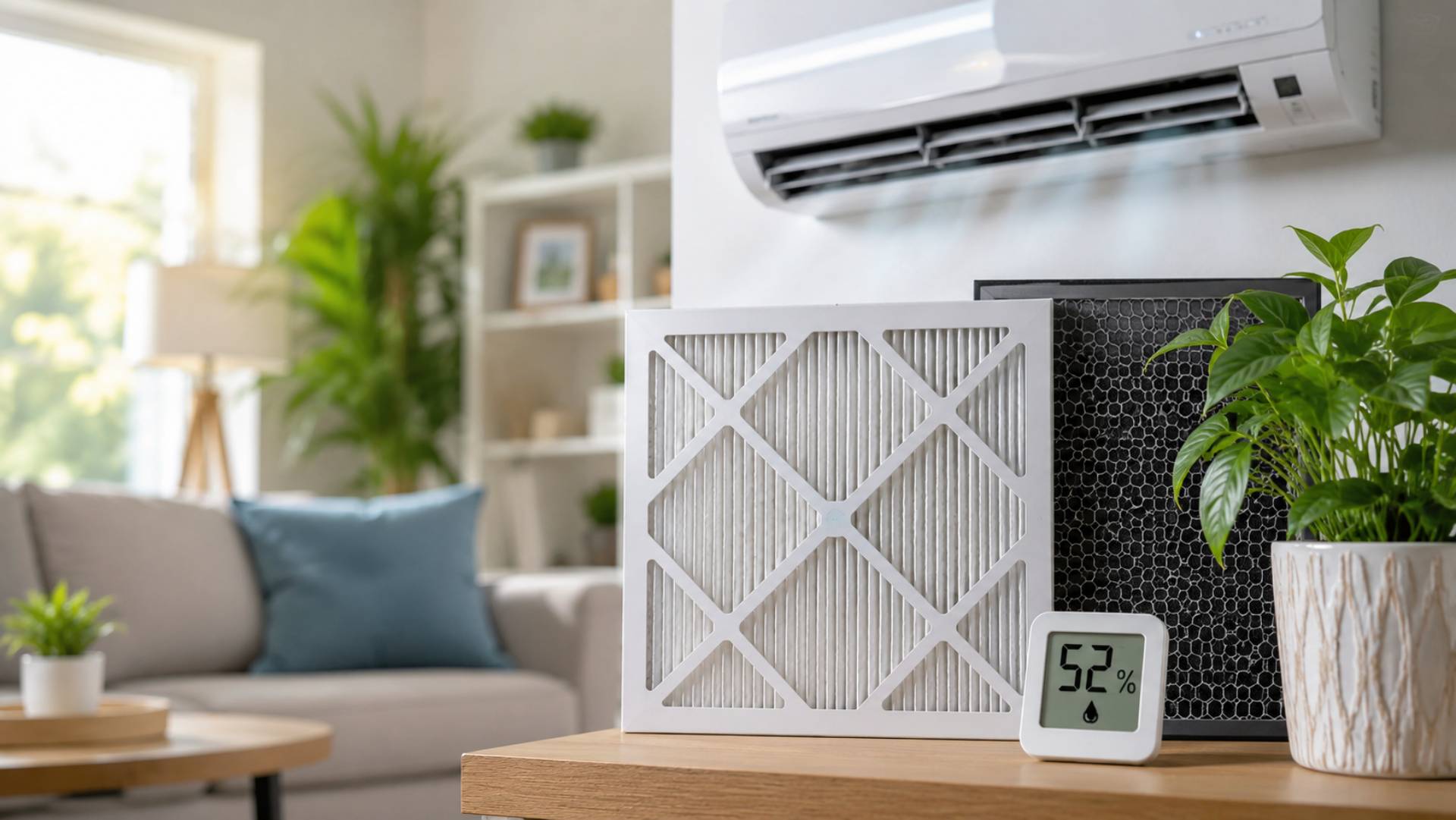
Many filters are given a MERV rating, which indicates how effectively they capture different sizes of particles. Higher ratings generally provide finer filtration, but that does not automatically make a high-rated filter the right choice for every residential HVAC system.
A more restrictive filter can increase resistance to airflow. If the system was not designed to handle that resistance, airflow may decrease.
Before upgrading to a significantly higher-rated filter, check the HVAC manufacturer’s recommendations or ask an HVAC professional to confirm that the system can handle it.
Why Airflow Matters
Your air conditioner needs adequate airflow to operate properly. If the filter becomes heavily loaded with dust or is unnecessarily restrictive, less air may move through the system.
Restricted airflow can contribute to:
- Reduced cooling performance
- Longer system run times
- Uneven temperatures
- Increased energy consumption
- Greater stress on HVAC components
- Potential coil or system problems
This is why filter selection should balance filtration needs with the airflow requirements of the equipment.
How Often Should You Replace an AC Filter?
There is no single replacement schedule that works for every household.
A basic filter may need attention every one to three months, while some systems and household conditions require more frequent changes. The manufacturer’s recommendation should be the starting point.
You may need to check the filter more often if your home has:
- Multiple pets
- Heavy dust
- Recent renovation work
- Frequent HVAC use
- Several occupants
- Construction activity nearby
- A household member with sensitivity to airborne particles
Rather than relying only on the calendar, inspect the filter regularly. If it is visibly dirty or clogged, it may be time to replace it.
Pets and Indoor Air Quality
Pet hair and dander can increase the amount of material captured by an HVAC filter. Homes with dogs or cats may therefore require more frequent filter checks.
A filter can capture some airborne pet-related particles, but it cannot eliminate every source of allergens. Regular cleaning, vacuuming, grooming, and appropriate ventilation should work alongside HVAC filtration.
Renovation Dust Requires Extra Attention
Home improvement projects can generate substantial amounts of fine dust. Drywall work, sanding, cutting, demolition, and similar activities can introduce particles into the indoor environment.
During and after renovation work, monitor the HVAC filter more closely. If construction dust enters the return-air system, simply replacing the filter may not address all contamination.
For larger projects, it can be worthwhile to discuss HVAC protection and indoor air quality measures with an experienced professional before work begins.
The Connection Between Air Conditioning and Humidity
Air conditioning affects more than temperature. As warm indoor air passes over the system’s cold evaporator coil, moisture can condense and be removed from the air.
This is one reason a properly operating air conditioner can make a home feel more comfortable even when the temperature has not changed dramatically.
However, an air conditioner is not always a complete humidity-control solution.
Why Indoor Humidity Matters
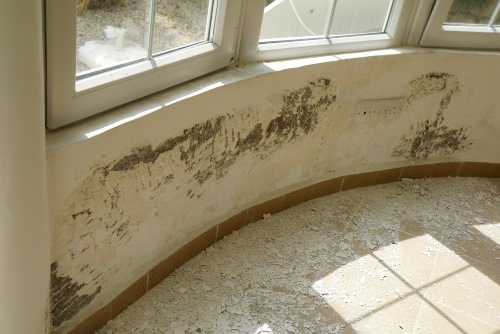
Excessive indoor humidity can make a home feel warmer and less comfortable. It can also contribute to conditions that encourage mould and musty odours.
Very dry indoor air can create a different set of comfort concerns.
The ideal indoor humidity level varies with climate, building conditions, and household needs, but maintaining a moderate indoor environment is generally the goal.
If humidity remains high even when the AC is running, the underlying cause should be investigated rather than simply lowering the thermostat.
What Can Cause High Indoor Humidity?
Several factors can contribute to excessive moisture indoors, including:
- Poor ventilation
- Air leaks
- Plumbing or roof leaks
- Inadequate exhaust ventilation
- Oversized air conditioning equipment
- High outdoor humidity
- Excessive moisture from cooking or bathing
- Poorly managed condensate
An oversized AC can be particularly relevant because it may cool the space quickly and shut off before operating long enough to remove as much moisture as a properly sized system.
Don’t Ignore the Condensate Drain
Air conditioning systems produce condensate as they remove moisture from indoor air. That water needs to drain properly.
A blocked or poorly maintained condensate drain can cause water to back up and potentially damage surrounding components or building materials.
Regular HVAC maintenance should include checking the condensate system and addressing signs of leakage, standing water, or unusual moisture around the equipment.
Does a Dirty Duct System Affect Indoor Air Quality?
Ductwork naturally collects some dust over time. However, the presence of dust in ducts does not automatically mean that professional duct cleaning is required.
The condition of the duct system, the type and amount of contamination, moisture problems, and overall HVAC performance should be considered before deciding whether cleaning is appropriate.
More importantly, homeowners should address the source of contamination. Improving filtration, repairing leaks, controlling moisture, and keeping return-air pathways clean can help prevent unnecessary buildup.
What About Air Purifiers and Other IAQ Equipment?
Filtration is only one approach to indoor air quality.
Depending on the home and the specific concern, additional equipment may include:
- Portable air cleaners
- Whole-home air cleaners
- Electronic air-cleaning systems
- Humidifiers
- Dehumidifiers
- Improved ventilation systems
Each option serves a different purpose. For example, a dehumidifier addresses excess moisture, while an air cleaner is designed to remove airborne particles.
There is no single indoor air quality product that solves every problem.
Common AC Filter and Air Quality Misconceptions
Myth: The highest MERV filter is always the best.
Reality: Higher filtration can be useful, but the filter must be compatible with the HVAC system’s airflow requirements.
Myth: Changing the filter fixes every indoor air quality problem.
Reality: Filtration cannot solve issues such as excessive humidity, poor ventilation, moisture intrusion, or certain sources of indoor pollution.
Myth: A filter only needs changing when it looks completely dirty.
Reality: A filter can accumulate enough material to affect airflow before it looks dramatically clogged. Regular inspection is a better approach.
Myth: Air purification means the home no longer needs ventilation.
Reality: Filtration and air cleaning do not replace the need for appropriate ventilation and moisture management.
A Practical HVAC Filter Maintenance Routine
A simple maintenance routine can prevent many avoidable problems.
- Check the filter regularly. Inspect it more frequently during periods of heavy AC use.
- Use the correct size. A filter that does not fit properly can allow air to bypass the filtration material.
- Follow manufacturer guidance. Check the recommended filter type and rating for your equipment.
- Consider household conditions. Pets, dust, renovation work, and heavy system use may require more frequent replacement.
- Monitor airflow. Noticeable reductions in airflow should not be ignored.
- Watch indoor humidity. Persistent moisture problems may require a separate solution.
- Schedule professional maintenance. Have the system inspected when performance or air quality concerns continue.
When Should You Call an HVAC Professional?
Some filter and maintenance tasks are straightforward, but persistent indoor air quality or humidity problems deserve professional attention.
Consider an HVAC assessment if you notice:
- Weak airflow from multiple vents
- Persistent high humidity
- Unusual odours
- Frequent system cycling
- Rising energy bills
- Water around the indoor unit
- Repeatedly dirty filters
- Poor cooling performance
- Significant dust despite regular cleaning
A professional can evaluate airflow, equipment condition, ductwork, condensate management, and humidity levels to determine whether the issue is related to filtration or something deeper within the HVAC system.
Conclusion
AC filters play an important role in protecting HVAC equipment and supporting cleaner indoor air, but filtration is only one part of the bigger picture. Choosing a filter requires more thought than simply selecting the highest available rating.
The right filter should provide appropriate particle capture without unnecessarily restricting airflow. Household conditions such as pets, renovation dust, and heavy AC use can also affect replacement intervals.
For better indoor comfort, homeowners should consider filtration alongside humidity control, ventilation, ductwork, condensate management, and regular HVAC maintenance. When these elements work together, the system can operate more efficiently while creating a healthier and more comfortable indoor environment.